Case study · Food & local economies

Putting local food on institutional menus.

We partnered with Cureate to grow Cureate Connect — a procurement marketplace that links independent food and beverage makers with hospitals, universities, hotels, and arenas through regional "cureators" who handle the sourcing and logistics.

B2B marketplace Payments & procurement Ruby on Rails
3-sidedVendors, buyers & cureators
20Sourcing filters
1Invoice for many vendors
1,200+Commits shipped
Cureate Connect
The context

Big buyers, small makers, and a gap between them.

Cureate helps food and beverage entrepreneurs in the Mid-Atlantic grow their businesses. Institutions wanted to buy more fresh, local, and diverse products, but onboarding dozens of small suppliers — each with its own contract, schedule, and invoice — made it impractical. Cureate Connect set out to become the master supplier of local goods: one relationship for the buyer, real wholesale opportunities for the vendor.

01 · The challenge

Make many small suppliers feel like one.

The marketplace had to serve three very different users at once — and hide the complexity of a fragmented local supply chain behind a single, simple purchasing experience.

  • 01Matching institutional requests to vendors by category, certification, and dietary needs.
  • 02Consolidating orders from many vendors into one purchase order and one invoice.
  • 03Coordinating recurring deliveries and payouts without adding work for small businesses.
02 · The build

A procurement platform with a human in the loop.

Working inside the Cureate team, we extended a Ruby on Rails platform with role-based workspaces for vendors, buyers, cureators, and administrators — pairing marketplace tooling with the regional experts who make each match.

01

Requests & proposals

Buyers post sourcing requests; vendors respond with proposals, and cureators assigned by territory guide each match.

02

Orders & scheduling

One-time and recurring deliveries, a shared order calendar, iCal export, and SMS reminders before every drop-off.

03

Payments & invoicing

Stripe Connect payouts directly to vendors, consolidated purchase orders, and per-line-item invoice tracking.

03 · The product

Source locally, buy like it's one supplier.

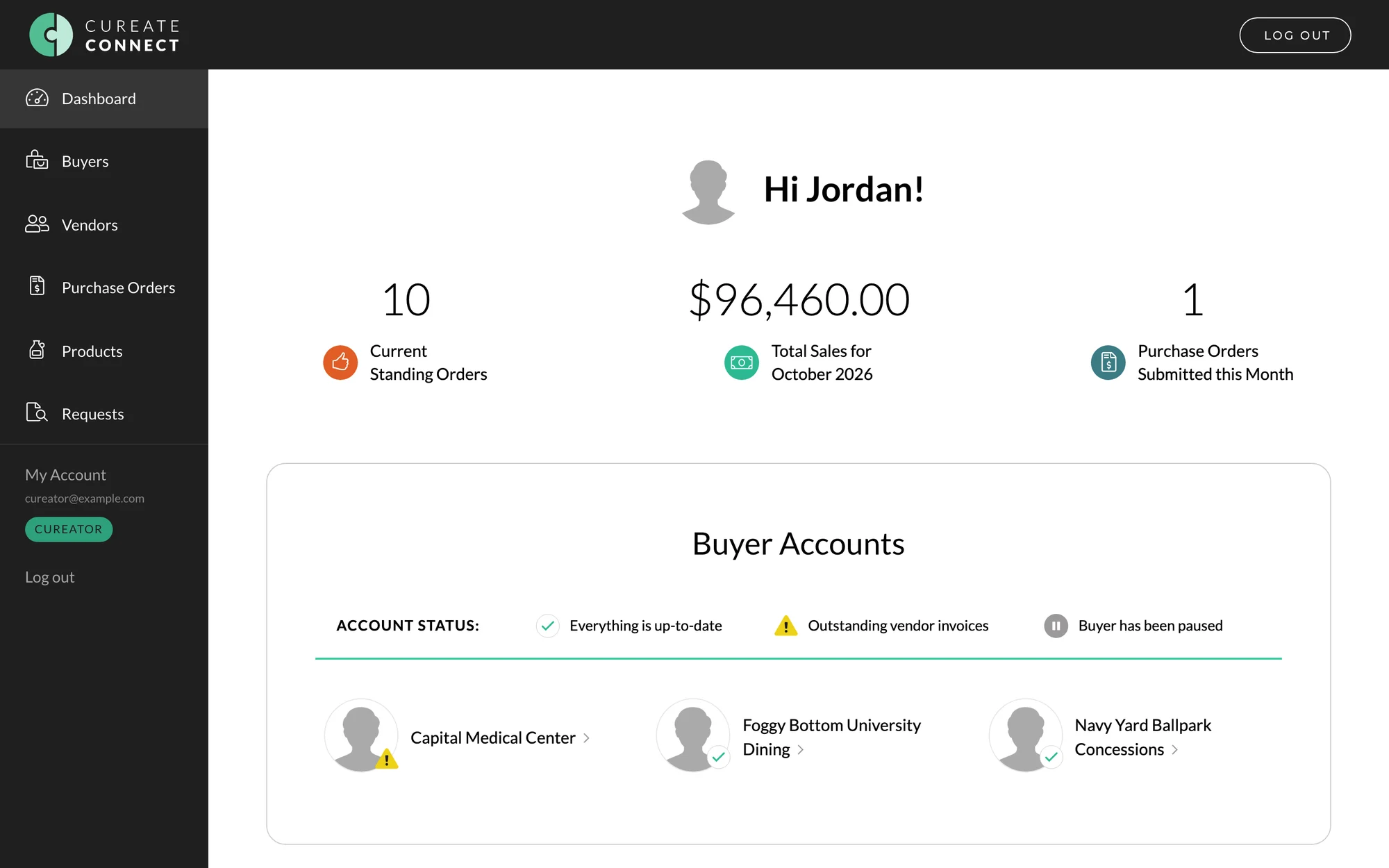
Cureators work from one dashboard that covers every request, order and delivery in their territory. Buyers and vendors each get a focused view of the same orders.
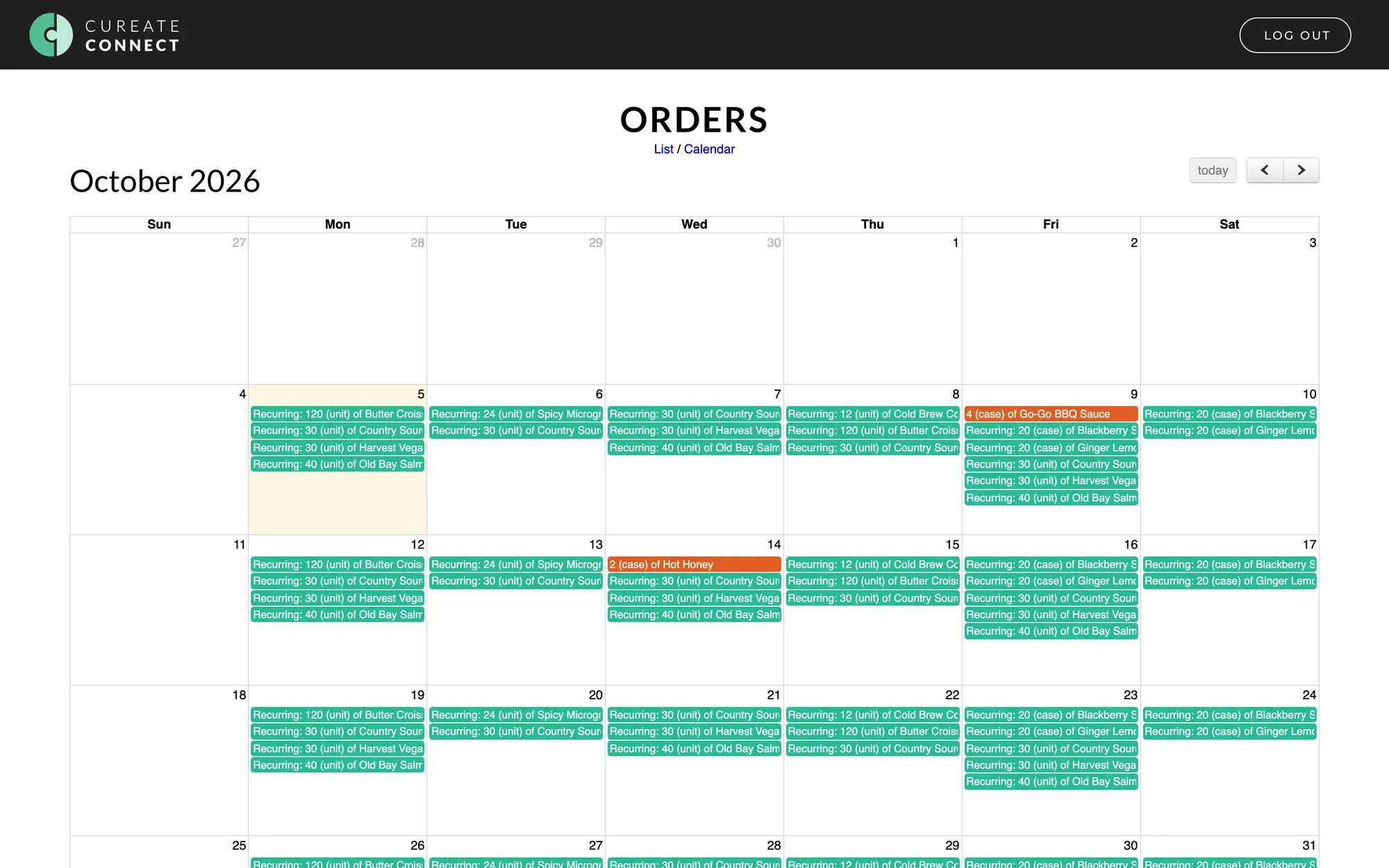
Cureate Connect order calendar showing recurring and one-time deliveries across vendors for the month
01A shared delivery calendar puts every recurring and one-time order across all vendors on one schedule, with iCal export.
Cureator dashboard with standing orders, monthly sales, purchase orders and buyer account status
02The cureator dashboard shows standing orders, monthly sales and which buyer accounts need attention.
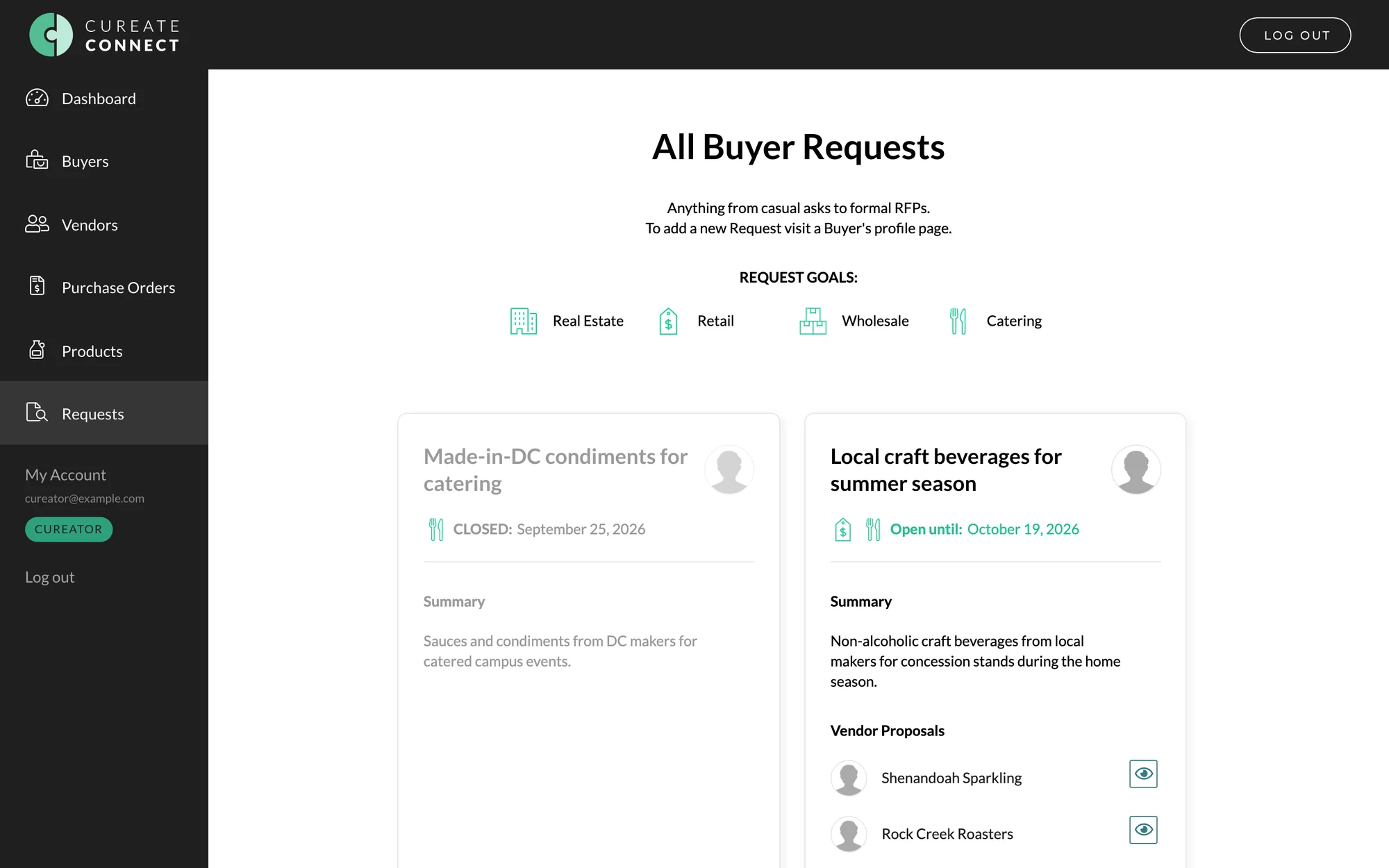
Buyer requests with open and closed dates and vendor proposals attached
03Buyers post requests, from casual asks to formal RFPs, and vendor proposals collect beneath each one.
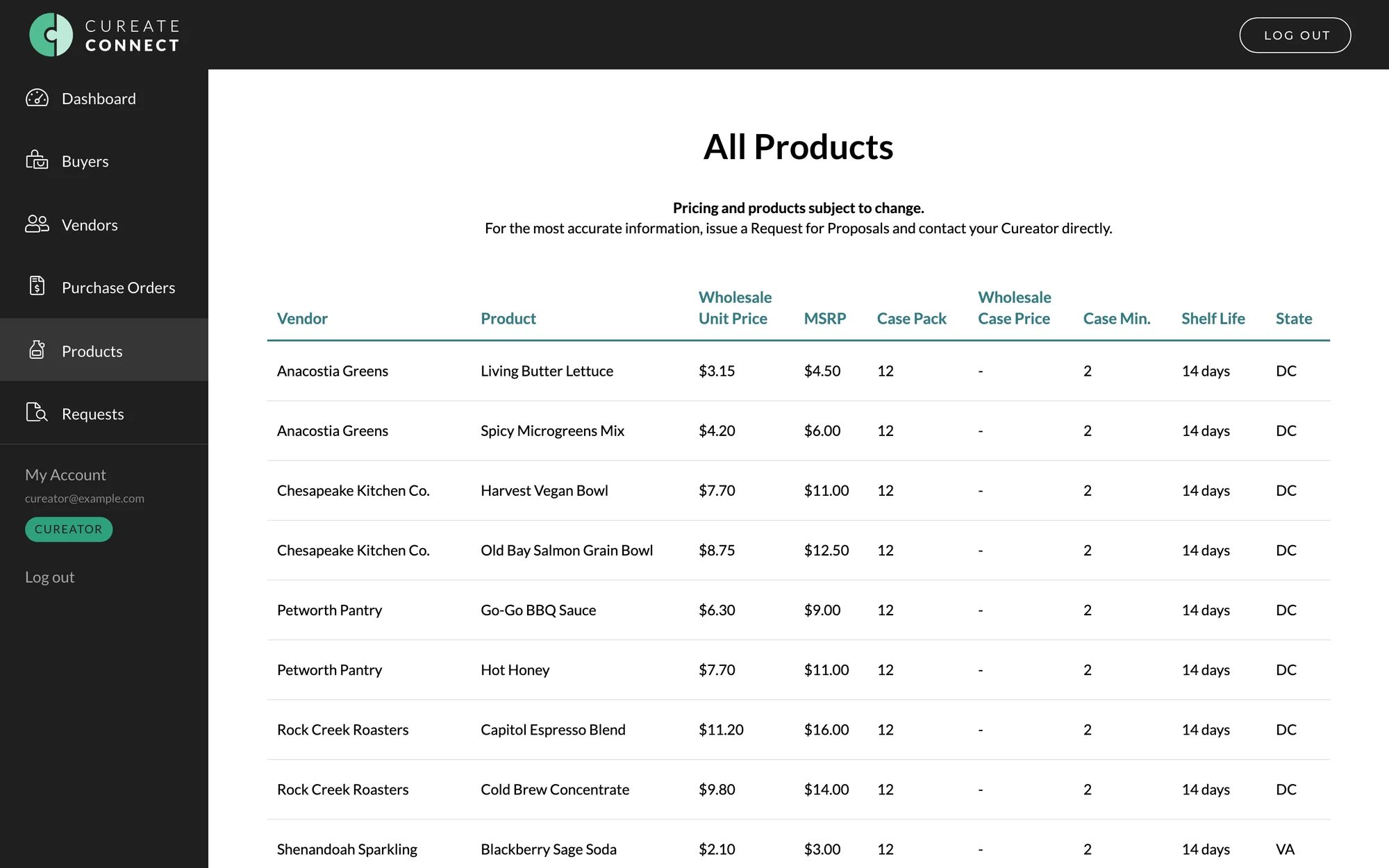
Wholesale product catalog with unit, case and MSRP pricing, case minimums and shelf life by vendor
04A wholesale catalog with case packs, minimums and shelf life, filterable by 8 categories, 6 certifications and 6 diets.
04 · The result

A resilient local supply chain, run on software.

  • 01Institutions buy from many local makers through one contract and one invoice.
  • 02Vendors get paid directly through Stripe Connect and reminded before every delivery.
  • 03Regional cureators manage buyers, purchase orders, and invoices from a single dashboard.
  • 04Cureate's team runs the marketplace through an admin console with reporting and CSV exports.
Kim Bryden
Source Labs has been instrumental to team Cureate, not just in development, but in complex problem solving. Source Labs has been, and will continue to be, integral to team Cureate.
Kim BrydenFounder & CEO, Cureate
Continue exploring

See more of our work.